

Processor Control Number on a Health Insurance Card (2026 Details Explained)
The Processor Control Number on a health insurance card helps route claims and impacts monthly rates, with specific plans starting at $350. How pharmacies use processor control numbers is essential for processing claims accurately, ensuring medications are covered under the appropriate plan.
Read more





Find the Lowest Car Insurance Rates Today
Drivers have found rates as low as $42/month in the last few days!




Table of Contents
Table of Contents

Insurance Operations Specialist
Michael earned a degree in Business Management degree with an insurance focus, which led to a successful 25-year career in insurance claims operations and support. He possesses a high-level of business acumen across multiple areas of the insurance industry. Over the course of his career, he served in multiple roles supporting claims operations including: Claims Specialist, Claims Trainer, Claim Au...
Michael Leotta

Licensed Insurance Producer
Dani Best has been a licensed insurance producer for nearly 10 years. Dani began her insurance career in a sales role with State Farm in 2014. During her time in sales, she graduated with her Bachelors in Psychology from Capella University and is currently earning her Masters in Marriage and Family Therapy. Since 2014, Dani has held and maintains licenses in Life, Disability, Property, and Casualt...
Dani Best
Updated September 2024
Monthly rates for plans featuring the Processor Control Number on a health insurance card or pharmacy claim processing number start at $350. This number is critical for ensuring efficient claim processing and accurate billing.

Knowing how to find this number on your card and its importance in managing your insurance will help you handle your health coverage with ease. Read further to learn how the Processor Control Number affects your benefits and monthly costs, especially if you’re wondering, “What happens if I am denied life insurance coverage based on the health evaluation?”
Read on to learn more about the Processor Control Number on your insurance card. But before you do, enter your ZIP code for fast, free health insurance quotes.
- Processor Control Number on your card ensures accurate claims
- Find the pharmacy claim processing number to verify coverage
- Monthly rates begin at $350, depending on plan and coverage options
How Processor Control Numbers Work
| Insurance Type | Acronym | Key Features | Referral Requirement | Out-of-Network Coverage |
|---|---|---|---|---|
| Health Maintenance Organization | HMO | Care provided by in-network doctors and hospitals | Required to see a specialist | Typically not covered |
| Exclusive Provider Organization | EPO | Care provided by in-network doctors and hospitals | Usually not required | Typically not covered |
| Preferred Provider Organization | PPO | Covers visits to both in-network and out-of-network providers | Not required | Available at a higher cost |
| Point of Service | POS | Combines features of HMO and PPO | May be required to see a specialist | Available at a higher cost |
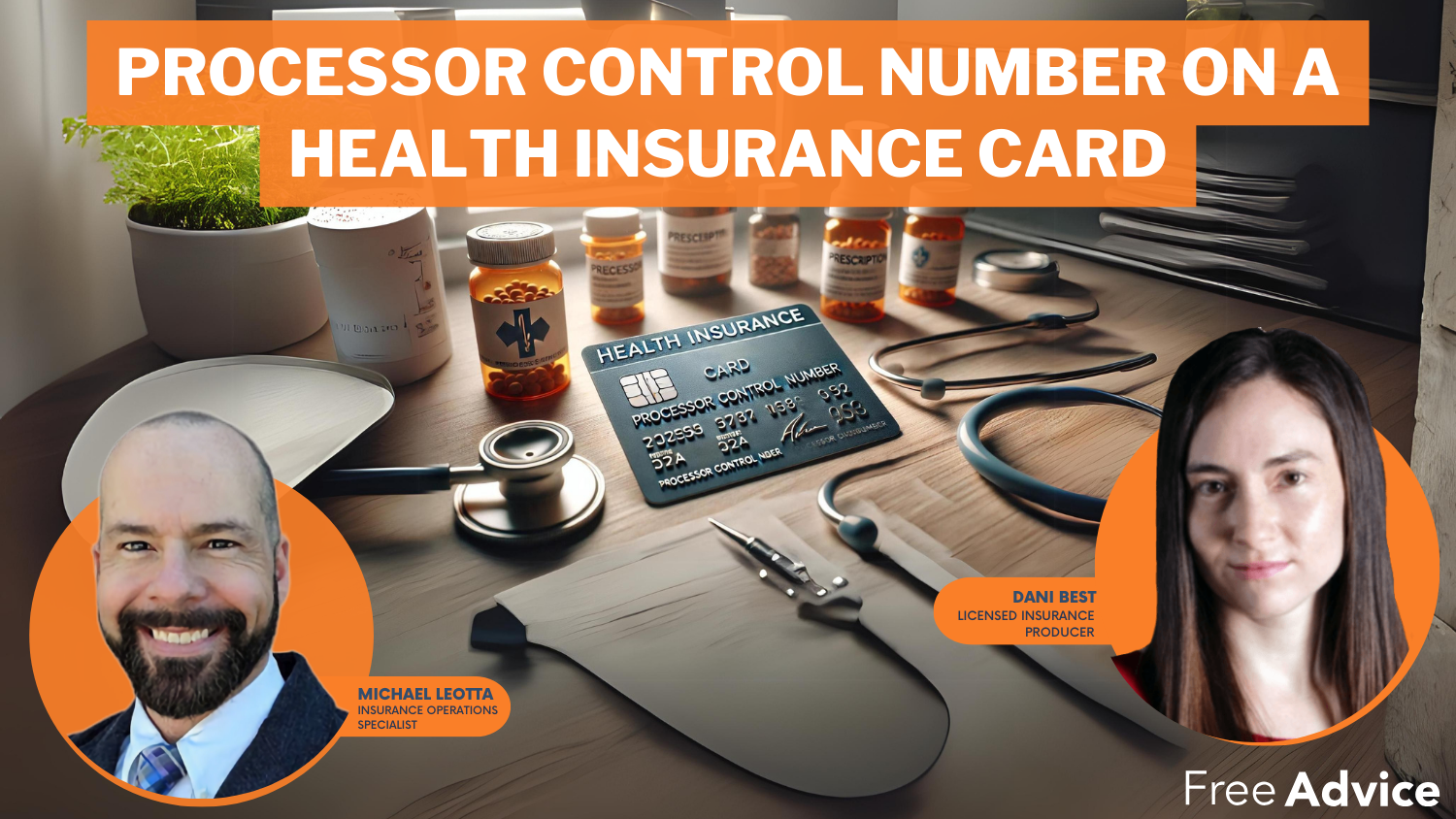
When looking at your insurance card, you’ll see your Processor Control Number listed after “RxPCN.” Your specific processing control number may be alphanumeric or numeric.
Your pharmacy will use this number, as well as your bank identification number (BIN), to process your prescription drug claim. While the BIN is used to tell your pharmacist which insurance provider you have a policy with, the PCN is used to route the claim.
Free Health Insurance Comparison
Compare Quotes From Top Companies and Save
What If Your Health Insurance Card Doesn’t Have a Processor Control Number
Don’t worry if you’re looking at your insurance card but can’t find your PCN. Not every health insurance provider uses Processor Control Number.
New Link Destination
confirm that your specific provider doesn’t use PCNs, you can contact your insurance company to check your accounts details.
Why Do You Need a Health Insurance Card?
If you already have a health insurance policy, you may wonder why you need a health insurance card. Essentially, a health insurance card functions as proof of your insurance. Its identifying numbers also allow your healthcare providers to look up your policy information.
But your health insurance card doesn’t only serve your medical providers. For you, the cardholder, a health insurance card provides a quick reference to your policy information. Most insurance cards can tell you:
- What type of plan you have
- What benefits are included
- The cost of your copay and deductibles
By carrying your insurance card and understanding how to read it, you’ll be prepared for any medical expenses that might come up and ensure you’re always ready for necessary care. If you’re wondering, Does American National Insurance car insurance cover my medical expenses after an accident? it’s important to understand the details to avoid unexpected costs.
Information You Can Find on Your Insurance Card
Aside from your BIN and PCN, your health insurance card will also include other crucial details about your policy, such as what is a health insurance policy? Knowing these details is essential to fully understand your coverage and how to effectively use your benefits.
- Name of the insured: If you’re the owner of the insurance policy, your name will be on the insurance card. If you’re on a family member’s insurance policy, both names will appear on the card, with the policyholder’s name appearing first. Dependents’ names may not appear on the card.
- Identification number: This is a unique number that identifies the insured.
- Group number: If you receive health insurance through your employer, your health insurance ID card will show a group number. This number is similar to your identification number, but rather than identifying the insured, it identifies your employer’s insurance package.
- Your insurance plan type: There are different types of health insurance plans, and not all coverage is the same. Therefore, there will be an acronym identifying your insurance plan type on your health insurance card. This will help you to identify in and out-of-network providers.
- Your plan number: Your plan number shows which specific plan you have with your provider.
- Benefits: Your specific benefits, including medical, vision, or dental, may also appear on your insurance card.
- Costs: Your card will likely show information regarding your deductibles and copays for both in-network and out-of-network providers.
- Provider contact information: Provider contact information can also be found on your insurance card. Use this information to contact your insurance company if you have any questions about your plan or need help finding a doctor.
Requirements for Carrying a Health Insurance Card
Even if you’re not planning to visit your doctor’s office anytime soon, it can be beneficial to always have your insurance card on you, just as you would with your driver’s license. This way, if any unforeseen medical emergencies occur, you’ll be ready with all the necessary insurance information.
Fortunately, health insurance cards are usually wallet-sized and can be stored with your other ID cards or credit cards. You can also keep a photo of your health insurance ID card stored on your smartphone in case you ever lose your physical copy.
Free Health Insurance Comparison
Compare Quotes From Top Companies and Save
Choosing Your Health Insurance Policy
Understanding the health insurance landscape and considering your personal medical needs are crucial to finding an insurance policy that’s right for you. When deciding on a plan, you’ll want to consider several different factors, including the plan type, category, and cost.
Health Insurance Plan Types
While there are variations from company to company, health insurance policies generally break down into the following categories:
- Health Maintenance Organization (HMO): This policy only covers care provided by in-network doctors and hospitals. If you have this type of policy and need to see a specialist of any kind, you’ll likely need a referral from your primary care physician.
- Exclusive Provider Organization (EPO): In most cases, this policy also only covers providers in your network. However, you may not be required to get a referral if you need to see a specialist.
- Preferred Provider Organization (PPO): With this policy, your insurance can help you cover the cost of visits to both in-network and out-of-network providers. However, you’ll likely have to pay more for out-of-network care.
- Point of Service (POS): This type of policy combines aspects of other policies to varying degrees. For instance, you may need a referral to see a specialist, but you may also receive health coverage for out-of-network providers (at a slightly higher cost).

Even with these categories, it’s important to note that there are no industry-wide definitions of plan types, so your plan’s specifics may vary depending on your provider and the state in which you live. Before deciding on a plan type, be sure to research individual policies with specific providers to find the plan best suits your needs.
Health Insurance Plan Categories
Within each plan type, health insurance policies on the marketplace come in four levels:
- Bronze
- Silver
- Gold
- Platinum
But don’t be fooled into thinking a platinum plan is automatically the best. According to Healthcare.gov, “Metal categories are based on how you and your plan split the costs of your health care. They have nothing to do with the quality of care.”
However, these metal categories do operate on a spectrum. At one end of the spectrum, bronze plans have the lowest monthly premiums but the highest out-of-pocket costs. On the other end of the spectrum, platinum plans will allow you to pay the least amount of money when receiving medical care but require the highest monthly premiums.
Ultimately, you’ll have to perform a cost-benefit analysis and assess your unique situation to see which plan category is right for you.
Health Insurance Costs
Health insurance costs can take several forms, including premiums, deductibles, and copayments. The amount you’ll have to pay for each of these costs will depend on your specific plan. While some plans offer lower costs in certain areas, such as deductibles, these savings usually come at the expense of higher costs in other areas, such as your premium.
New Link Destination
choose the health insurance plan that’s right for you, take a moment to understand what each of these categories covers.
- Premium: This is the monthly payment you send to your insurance provider, even if you don’t need any medical services that month. To understand the process better, you might ask, “How can I pay my CSAA Insurance Exchange insurance premium?” It’s essential to know the options available for easy and timely payments.
- Deductible: This is the amount you have to spend out of pocket on your medical care before your insurance company steps in to cover any costs. Your deductible resets every time you renew your healthcare plan (typically once a year).
- Coinsurance or copayment: There’s a difference between coinsurance and a copayment. Coinsurance is a percentage of the cost of care that you have to pay out of pocket. A copayment is a fixed amount you have to pay your for medical care. Both apply even after you’ve reached your deductible in most cases.
Processor Control Numbers and Finding the Best Policy
The world of health insurance revolves around confusing acronyms, long strings of numbers, and significant variations between providers and their policies. Does the processor number on your health insurance card have anything to do with finding the right coverage?
The good news is, that number only matters when a pharmacy is processing your prescription, and for the most part, you don’t need to worry about it.
Jeff Root Licensed Insurance Agent
Here’s some positive news: You don’t need to be an expert in health insurance terms to find an affordable plan that fits your healthcare needs. Additionally, if you’re curious, “Can I get a good health discount on my life insurance policy?” it’s essential to read on to see how understanding these details can help you secure the best rates.
Case Studies: Significance of Processor Control Numbers (PCNs) on Health Insurance Cards
Processor Control Numbers (PCNs) on health insurance cards are essential for accurate claim processing. They facilitate the efficient verification and approval of pharmacy claims, ensuring correct benefits are applied. Understanding PCNs helps prevent billing errors and ensures smooth insurance transactions.
Case Study 1: Missing Processor Control Number
John recently visited his doctor, and after his check-up, the physician prescribed him some medication. He handed over his health insurance card to the pharmacy, but they couldn’t find a Processor Control Number (PCN) listed on it. Confused, John contacted his insurance company to inquire about the missing PCN.
Not all health insurance providers use Processor Control Numbers. In John’s case, his insurance company confirmed that they don’t use PCNs for routing pharmacy reimbursements. Instead, they identified John’s policy using his other identification details. It’s essential to be aware of your specific health insurance provider’s practices, and if you have any doubts, reach out to them directly for clarification.
Case Study 2: Smooth Prescription Processing
Sarah recently changed her health insurance plan and received a new insurance card with a Processor Control Number. She needed to refill her prescription for a chronic condition and was pleasantly surprised at how smoothly the pharmacy processed her claim.
Having a Processor Control Number on her health insurance card made the prescription processing a breeze for Sarah. The PCN, along with the Bank Identification Number (BIN), allowed the pharmacy to route the claim accurately, ensuring that Sarah received her medication without any financial burden. If your insurance plan does use PCNs, make sure to have it ready when filling prescriptions to avoid potential delays or confusion.
Case Study 3: Prepared for Medical Emergencies
Michael understood the importance of carrying his health insurance card with him at all times, just like his driver’s license. One day, he was involved in a minor accident and had to visit the emergency room. Having his insurance card on hand allowed him to provide all the necessary insurance information promptly.
Unexpected medical emergencies can happen at any time. By carrying your health insurance card with you, you’re always prepared to provide vital policy information to healthcare providers. Your insurance card not only serves your medical providers but also acts as a quick reference to your policy details, making it easier to receive the necessary healthcare without facing unexpected financial burdens.
Case Study 4: Choosing the Right Coverage
Emily recently graduated and started her first job, which offered her health insurance coverage. As she explored her options, she found herself overwhelmed by the different plan types and categories. She wanted to make an informed decision about her health insurance. Understanding the various health insurance plan types and categories is crucial when selecting the right coverage for your needs.
Each health insurance plan comes with its own set of limitations and benefits, so it’s important to thoroughly review individual policies. Pay particular attention to the renewal and reinstatement provisions in a health insurance policy to understand how these aspects might affect your coverage over time. Instead of getting caught up in details like processor numbers, concentrate on finding the plan that best aligns with your medical needs and budget.
Frequently Asked Questions
What should you do if there’s no PCN number on your insurance card?
If there is no PCN number on your insurance card, contact your insurance provider or pharmacist for assistance. They can help you identify the correct number or provide guidance on how to proceed with your claim.
What is the control number on an insurance card used for?
The control number on an insurance card helps manage and process claims efficiently. It ensures that the insurance company can accurately identify and process your specific policy and benefits.
How can you locate the PCN on your insurance card?
You can typically find the PCN (Processor Control Number) on your insurance card in the section marked “PCN” or “Processor Control Number,” and it might be located near the BIN or group number, depending on how your card is arranged. For those considering relocating, understanding this detail is crucial—especially if you’re wondering about how moving to Wisconsin will affect your health insurance.
What exactly is the PCN number on an insurance card?
The PCN number on an insurance card is a unique identifier used by pharmacies and insurance providers to process and manage claims. It helps ensure that the correct benefits are applied to your prescription or medical services.
What is an active duty dental control number?
An active duty dental control number is a specific code used to manage and process dental claims for active military personnel. It helps ensure that dental services are covered under the appropriate military benefits.
How do the BIN and PCN numbers differ in insurance?
The BIN (Bank Identification Number) identifies the insurance company or plan, and the PCN (Processor Control Number) specifies the exact processor managing the claim. Understanding these numbers is crucial for ensuring accurate claim processing. Are there any tax benefits or deductions associated with the cost of life insurance premiums? It’s essential to explore this to fully grasp how insurance details can affect your financial planning.
What does BIN stand for in health insurance?
In health insurance, BIN stands for Bank Identification Number. It is used to identify the insurance plan or company responsible for processing the claim.
How is the BIN number used on an insurance card?
The BIN number on an insurance card is used to route claims to the appropriate insurance company or plan for processing. It ensures that claims are directed correctly for payment and benefit verification.
What is the meaning of a BIN number in insurance?
handling your claims. Understanding this is crucial for accurate claim routing and benefit verification. For example, if you’re wondering, “How do you file a life insurance claim with Medical Benefits Mutual Life Insurance Co.?” knowing the BIN number can be essential for ensuring your claim is processed correctly and efficiently.
Where can you find the BIN number on an insurance card?
The BIN number is typically found on the front of your insurance card, often labeled as “BIN” or “Bank Identification Number.” It is usually located near other important numbers like the PCN and group number.
What should you do if you can’t find your PCN number?
How is a BIN number applied in health insurance?
How do you locate a PCN number if it’s missing?
How do you identify the control number on an insurance card?
What role does the control number play in insurance?
Does PCN refer to a policy number in any way?
What is the purpose of the health insurance BIN number?
What are the BIN and PCN numbers for Humana insurance?
How is the PCN used in health insurance?
What is the best way to find the BIN number on an insurance policy?
What steps should you take if your insurance card lacks a group number?
How can you find your PCN number effectively?
How can you identify the BIN number on an insurance card?
What should you do if your insurance card does not list an RX BIN?
How do you find the PCN number on your insurance card?
How does the insurance processor utilize the BIN and PCN numbers?
What does the insurance PCN number signify?
Can a PCN number also be a policy number?
How can you locate the Medicaid PCN number?
What is the use of the medical BIN number in insurance?
Related Articles
-
Sep 2024

Cheap Car Insurance in Massachusetts for 2026 (Save Money With These 10 Companies)
-
Oct 2024
Best Car Insurance for CPAs in 2026 (Find the Top 10 Companies Here)
-
Sep 2024
Best Car Insurance for Ontrac Drivers in 2026 (Your Guide to the Top 10 Companies)
-
Sep 2024
Best Car Insurance for Architects in 2026 (Your Guide to the Top 10 Companies)
-
Oct 2024
Best Car Insurance for Instacart Drivers in 2026 (Find the Top 10 Companies Here)
-
Sep 2024
Cheap Car Insurance in Idaho for 2026 (Unlock Big Savings From These 10 Companies!)





Get the Help You Need Today
Get free insurance quotes or connect with legal experts in minutes

