Comprehensive vs. Non-Comprehensive Coverage in 2026 (Understand Your Options)
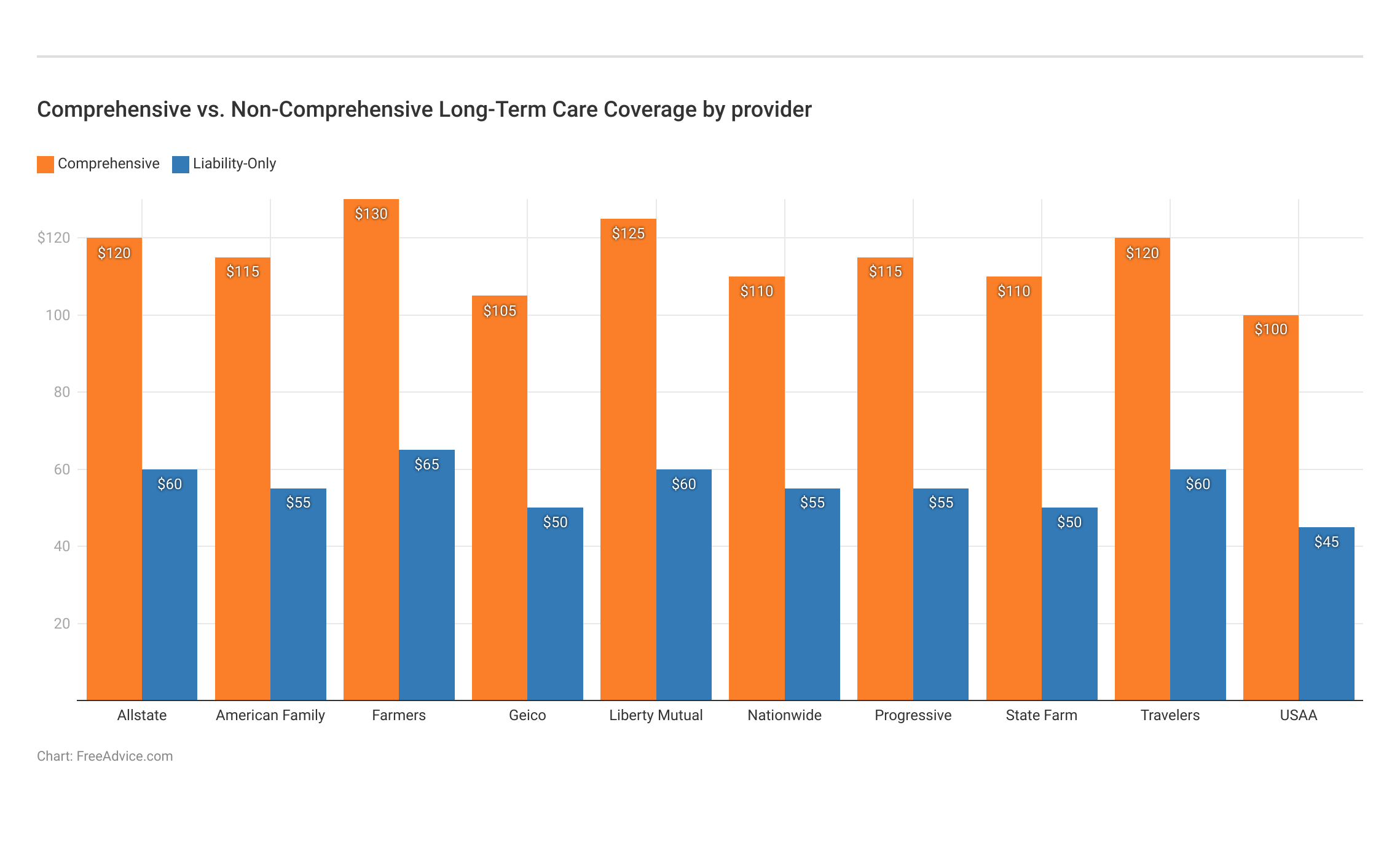
When comparing comprehensive vs. non-comprehensive coverage, note that comprehensive long-term care insurance averages $120 per month with providers like Allstate and Travelers, while non-comprehensive options average $50 per month with State Farm. This can help you decide between a comprehensive and non-comprehensive LTC policy.
Read more Secured with SHA-256 Encryption




Compare Quotes From Top Companies and Save
Life insurance policies starting at less than $1/day




Table of Contents
Table of Contents

Feature Writer
Rachel Bodine graduated from college with a BA in English. She has since worked as a Feature Writer in the insurance industry and gained a deep knowledge of state and countrywide insurance laws and rates. Her research and writing focus on helping readers understand their insurance coverage and how to find savings. Her expert advice on insurance has been featured on sites like PhotoEnforced, All...
Rachel Bodine

Licensed Insurance Agent
Chris is the founder of Abrams Insurance Solutions and Marcan Insurance, which provide personal financial analysis and planning services for families and small businesses across the U.S. His companies represent nearly 100 of the top-rated insurance companies. Chris has been a licensed life and health insurance agent since 2009 and has active insurance licenses in all 50 U.S. states and D.C. Chr...
Chris Abrams
Updated September 2024
When evaluating comprehensive vs. non-comprehensive coverage, it’s crucial to understand the benefits of each type of policy. Comprehensive coverage offers a wide range of protections, including in-home and facility care, whereas non-comprehensive policies are more limited.

In a comprehensive policy, benefits are paid for service delivered in nursing facilities, assisted living facilities, adult day care centers, or at home.
However, you may elect a reduced level of benefits for care received outside of a nursing home. A non-comprehensive policy restricts the benefits to services that are provided in nursing facilities. Curious to learn more? Take a look at our “Best Renters Insurance for People Living in Assisted Living Facilities“.
- Comprehensive coverage includes in-home and adult day care
- Non-comprehensive policies are limited to nursing facilities
- Travelers offers competitive rates for comprehensive coverage
Understanding Comprehensive vs Non-Comprehensive Long-Term Care Policies
When selecting a long-term care policy, it’s essential to understand the difference between a comprehensive vs non-comprehensive long-term care plan. A comprehensive long-term care policy provides broad coverage for various services, including in-home care, nursing facilities, and adult day care. On the other hand, a non-comprehensive LTC policy generally covers a more limited scope, often restricting coverage to specific settings or services.

For example, a facility challenged LTC policy might focus primarily on providing care in nursing homes or assisted living facilities, whereas a comprehensive LTC policy offers more flexibility and options for care. The distinction between a comprehensive long-term care policy and a non-comprehensive long-term care policy is based on the breadth and types of services covered.
A major consideration when comparing comprehensive vs non-comprehensive insurance is the range of benefits. The difference between comprehensive and non-comprehensive policies lies in the extent of coverage. For instance, a non-comprehensive NHIF cover or non-comprehensive maintenance plan may not cover all healthcare needs or services, offering only basic protections.
To clarify, what does non-comprehensive mean? It refers to a policy that provides limited coverage, often excluding specific types of care or services. Thus, the distinction between a comprehensive long-term care policy and a non-comprehensive definition of care is critical when planning for future health needs. Understanding what is the distinction between a comprehensive long-term care policy ensures individuals make informed decisions regarding their long-term care coverage.
Read more: What if I do not want to go to a nursing home?
Case Studies: Comprehensive Policy vs. Non-Comprehensive Policy
Case Study 1: Comprehensive Policy
Sarah purchases a comprehensive policy that provides benefits for care delivered in various settings, including nursing facilities, assisted living facilities, adult day care centers, and at home.
Ty Stewart Licensed Insurance Agent
This comprehensive coverage gives her the flexibility to receive care in the most suitable environment based on her needs. Sarah appreciates the comprehensive policy’s flexibility, allowing her to access care beyond nursing facilities if necessary.
Case Study 2: Non-Comprehensive Policy
Mark opts for a non-comprehensive policy that restricts the benefits to services provided exclusively in nursing facilities. This policy is more limited in scope and only covers care received in a nursing home setting. While it offers a narrower range of benefits, Mark decides it meets his specific needs and budget.
Case Study 3: Comparing Options
Lisa is evaluating different long-term care insurance policies and weighing the benefits of comprehensive and non-comprehensive options. She consults with an insurance agent who explains the features and limitations of each type.
After assessing her needs and preferences, Lisa determines that a comprehensive policy aligns better with her lifestyle and future care expectations. She values the flexibility and broader coverage provided by a comprehensive policy. Want to dig deeper? Our “The History of Long Term Care Insurance” has got you covered.
Comprehensive vs. Non-Comprehensive Coverage: Understanding Your Options
This guide compares comprehensive and non-comprehensive insurance coverage options for long-term care policies. Comprehensive policies, while more expensive, offer broader protection, covering a variety of scenarios such as in-home care and non-collision car damage. In contrast, non-comprehensive plans provide more basic, limited coverage but are generally more affordable.
The article also includes case studies to help readers choose the best policy based on their individual needs, budget, and preferences, ensuring a well-informed decision. Want to explore further? Dive into our options for paying your long term care insurance policy premium for additional info.
Frequently Asked Questions
What does comprehensive coverage mean?
Comprehensive coverage is a type of car insurance that protects you from non-collision-related damage to your vehicle, such as theft, fire, vandalism, natural disasters, or falling objects. It’s designed to cover damage that isn’t caused by a crash with another car or object.
Do I really need fully comprehensive car insurance?
Whether you need fully comprehensive car insurance depends on your personal situation. If you drive a newer or more valuable vehicle, comprehensive coverage may be worth the cost to protect against various risks. However, if your car is older or has a lower value, you might opt for less coverage.
Searching for more affordable premiums? Insert your ZIP code below to get started on finding the right provider for you and your budget.
What does very comprehensive mean?
“Very comprehensive” typically refers to a fully comprehensive car insurance policy that provides the broadest range of protection, covering your vehicle for almost all damage, including accidents, theft, fire, vandalism, and natural disasters.
Is CTPL part of comprehensive insurance?
No, CTPL (Compulsory Third Party Liability) is not part of comprehensive insurance. CTPL is a mandatory policy that covers bodily injury or death of third parties in an accident. Comprehensive insurance provides broader coverage, including damage to your vehicle from non-collision events.
Find out more by exploring our “What Is Insurance? What is Long-Term Care Insurance?“.
Can I drive any car with comprehensive?
Comprehensive insurance typically only covers the vehicle listed on your policy. If you want to drive other cars, you would need a policy with “driving other cars” coverage, or the vehicle you’re driving must be insured by its owner.
What is a good comprehensive deductible?
A good comprehensive deductible strikes a balance between affordability and risk. Many people choose deductibles between $250 and $1,000, depending on their financial situation and comfort level with out-of-pocket expenses in the event of a claim.
Is TPL needed if you have comprehensive insurance?
In some regions, TPL (Third Party Liability) is required by law regardless of whether you have comprehensive insurance. Comprehensive coverage usually includes third-party liability protection, but it’s essential to check your policy details to ensure compliance with local regulations.
What type of insurance should you choose?
The type of insurance you should choose depends on your vehicle, budget, and needs. If you want maximum protection, fully comprehensive insurance is a good choice. However, if you only want coverage for liability, a basic third-party or third-party, fire, and theft policy may be sufficient.
If you’re interested in the bigger picture, explore our “What Is Not Covered under Long-Term Insurance?”
Does comprehensive car insurance include?
Comprehensive car insurance includes coverage for damage to your vehicle from non-collision events such as theft, fire, vandalism, natural disasters, and animal-related incidents. It does not cover damage from collisions unless combined with collision coverage.
Which type of car insurance is the best?
The best type of car insurance depends on your needs. Fully comprehensive insurance provides the most coverage, but if you are looking for the most basic protection, a third-party liability policy might be sufficient.
What are the 2 basic types of insurance?
What is the best coverage for insurance?
What is an example of comprehensive?
What is another name for comprehensive?
How do you use comprehensive?
How much is the CTPL insurance?
What is non-comprehensive health insurance?
Get the Help You Need Today
Get free insurance quotes or connect with legal experts in minutes
Secured with SHA-256 Encryption